

Why Does Roofing Need Special Attention During Home Renovation?
Renovations—even those that seem minor—can unintentionally put significant stress on a roof. In Selkirk, NY, weather patterns range from heavy spring rains to icy winter conditions, meaning any damage or exposure during a project can quickly turn into leaks or long-term deterioration. Residents often underestimate how dust, debris, or even vibrations from construction can impact roofing over time.
What Risks Do Renovations Pose to the Roof?
Home renovations can impact a roof in several ways, even if the work is not directly related to the roofing itself.
- Shingles and flashing may be cracked or loosened by ladders, dropped tools, or foot traffic.
- Nails or fasteners could puncture roofing materials or underlayment.
- Dust and construction debris can clog gutters, causing drainage issues.
- Temporary structures (e.g., scaffolding or tarps) may trap moisture against the roof surface.
In Selkirk, because homes often experience freeze-thaw cycles, even small amounts of undetected roof damage can quickly escalate. Water that enters unseen cracks can freeze and expand, creating larger problems by the next season.
How Should Roof Areas Be Protected During Interior or Exterior Work?
Even an indoor renovation can create dust or require access that affects the roof. The most direct way to protect the structure is by establishing clear boundaries and access rules with workers, and using physical barriers to shield critical surfaces.
Practical prevention steps include:
- Using plywood boards or thick mats along roof paths where workers may walk
- Clearly marking areas that are off-limits for foot traffic
- Covering shingles with breathable tarps or plastic sheeting secured at the edges
- Screening attic vents or other roof openings to keep out dust and debris
For exterior work, it’s especially important to check all protection materials after storms or at the end of each workday. Wind or rain common in the Selkirk area can dislodge temporary covers or send debris onto the roof—so periodic checks reduce the risk of leaving the roof vulnerable overnight.
Are Gutters and Downspouts at Risk During Renovations?
Gutters and downspouts play a major role in protecting the roof by channeling water away from the home’s foundation and walls, particularly during thaw seasons or summer storms. During renovations, these elements can become blocked or bent by falling debris, causing water to back up onto the roof surface.
Homeowners can address this by:
- Requesting that workers regularly remove debris from gutters during the project
- Installing gutter guards temporarily to keep out construction fragments
- Inspecting downspouts at the end of each work phase, ensuring water is still flowing away from the foundation
What About Roof Access and Ladder Use?
Any time work requires roof access—such as installing solar panels, repairing chimneys, or painting upper stories—the method of access should be planned to avoid damaging shingles or underlayment.
- Ladders should be placed on stable ground and never leaned directly on gutters
- Padding can be added where ladder tops contact the roof edge
- Scaffolding should be set up clear of overhanging eaves or drip edges to avoid pressure points
In Selkirk, many homes have steep-pitched roofs or older structures with sensitive flashing. Choosing the correct ladder placement or scaffolding setup can make the difference between an intact roof and future repair needs.
How Can Weather Conditions Complicate Roof Protection During Renovations?
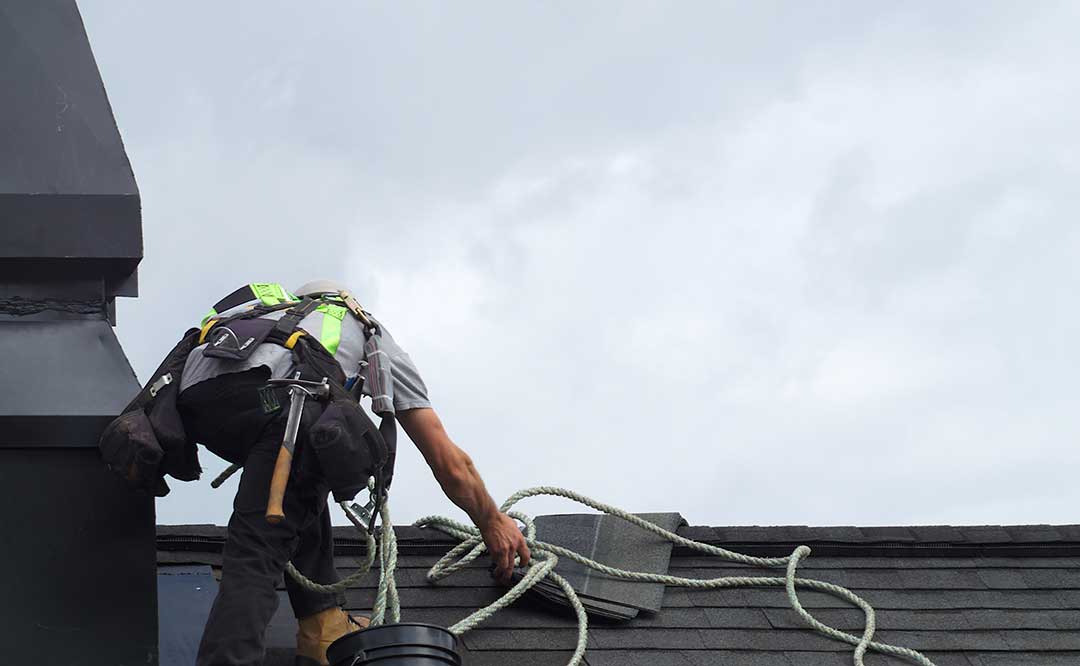
The local climate means that conditions can change quickly. Heavy rain, wet leaves, or snow can build up on temporary protection and add unexpected weight. Wind can pull away tarps or covers, leaving exposed surfaces. Checking weather forecasts before major construction starts is essential, but daily monitoring during the project helps as well.
If storms are predicted:
- Secure all temporary coverings tightly, using boards or weights rather than just tape or straps
- Avoid starting roof-adjacent work that cannot be finished and protected the same day
- Clear debris daily to prevent moisture retention that could seep beneath shingles
What Should Be Inspected Once Renovations Are Complete?
After all work is finished, a thorough inspection helps ensure no unintentional damage occurred. Residents can walk the perimeter of their home with binoculars or a camera to safely check for:
- Missing, fractured, or out-of-place shingles
- Dented or blocked gutters and downspouts
- Nails, screws, or debris left on the roof or in gutters
- Flashing that appears bent or unsealed, especially around openings and edges
It’s also smart to check attics or ceiling spaces for signs of moisture or daylight that could point to leaks. Since the area often experiences seasonal swings in temperature and precipitation, catching issues quickly reduces the risk of long-term roof damage.
Are There Common Mistakes to Avoid When Protecting Roofs During Renovation?
Some of the most frequent oversights seen during Selkirk renovations include:
- Assuming small projects won’t affect the roof or gutters
- Relying solely on plastic sheeting, which can trap condensation if not properly vented
- Forgetting to remove temporary protection after storms, which can create pooled water
- Leaving debris or nails on the roof, attracting rust or creating puncture risks during future storms
Learning from these common mistakes helps local homeowners preserve both the value and function of their roofs through renovation projects and the years that follow.
